We’ve all been fooled by the picture on the box. Whether it’s a gelatinous dinner or a shiny casino, the world is great at selling us a wrapper that looks better than the gift.
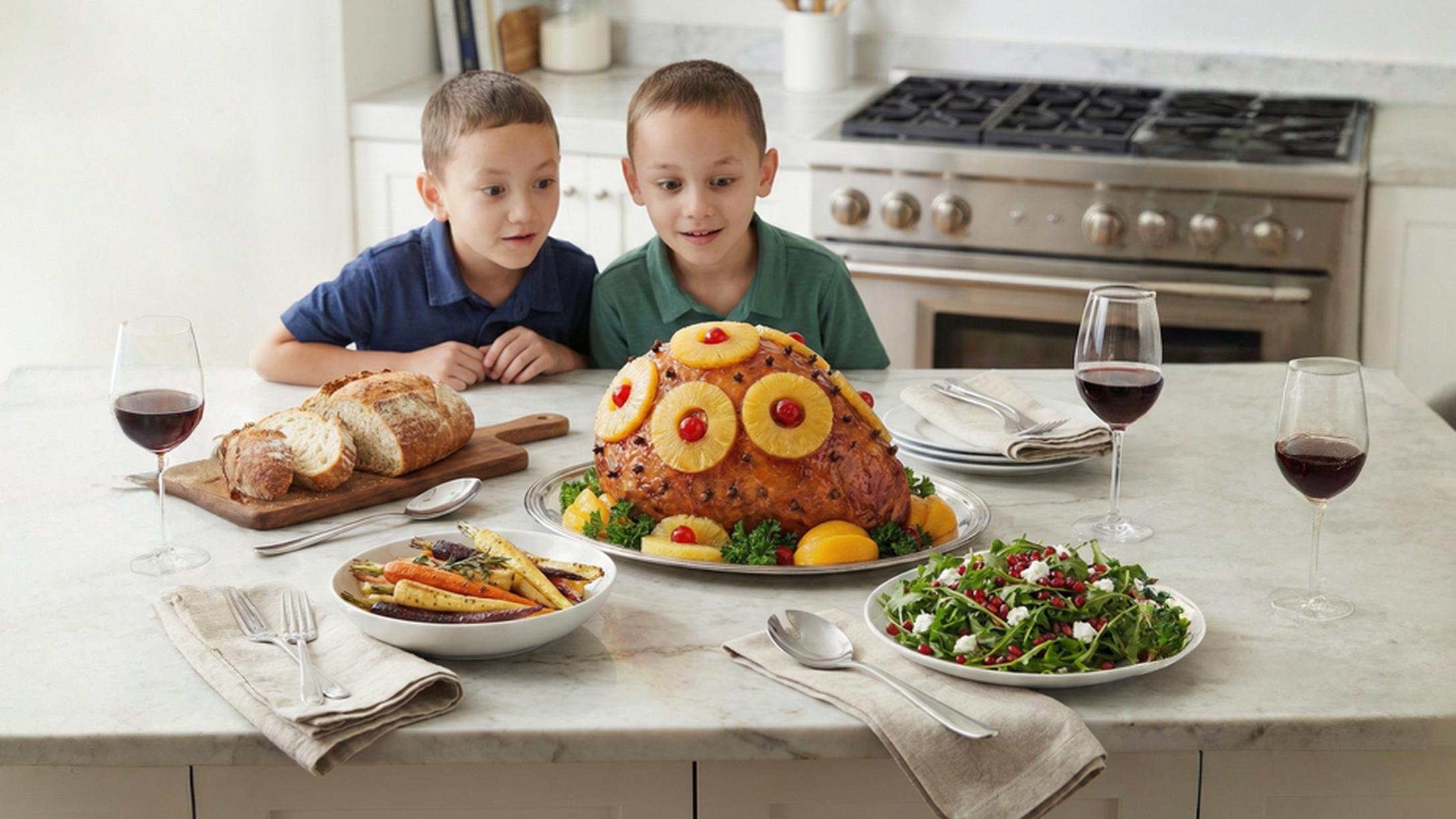
When I was a kid, the idea of a ham in a can (from an exotic, faraway land like Denmark, no less) was fascinating. I think the first time I saw one was in a mail-order catalog. The photo showed a perfectly symmetrical ham, with a glossy, caramelized finish, topped with pineapple rings and cloves. It looked like a feast fit for royalty, and my imagination ran wild with the possibilities. My parents, raised in the Great Depression and steeped in frugality, never bought one, which only added to the notion that these were some alluring delicacy—perhaps the fare of a people far more aristocratic than us.
It wasn’t until years later that I finally got my hands on one. But the moment I peeled back the lid, the fantasy died. There was no caramelized glaze, no pineapple rings—just a pale, gelatinous mass encased in jelly. The sight alone was enough to turn my stomach. I didn’t even have to taste it to realize how easily I had been fooled by appearances.
It’s a lesson that reminds me of the promises the world offers us. We trade the mail-order catalog for the late-night infomercial. Millions of people bought the Bowflex exercise machine believing the model’s flat stomach would be theirs in short order, but six months later, it’s just a $2,500 coat rack for our unwashed laundry.
We see this same “glaze” on a much grander, more dangerous scale in Las Vegas. Casinos are gilded monuments to this illusion, dressed up as shortcuts to prosperity. I used to tell my young economics students that they don’t build $2 billion casinos because a lot of people walk out of them with full pockets. In the end, the odds are never on your side, and the house always wins. The machines are built to vacuum your wallets, purses, and bank accounts while celebrating even the smallest payouts with exaggerated fanfare, all to keep you playing until your pockets are empty.
You see this same hunger in the movie Key Largo. Humphrey Bogart’s character presses the gangster Johnny Rocco—played by the legendary Edward G. Robinson—to admit what he’s actually chasing. When Bogart suggests that what Rocco really wants is simply “more,” the gangster agrees.
“Yeah. That’s it. More. That’s right! I want more!”
[convertkit form=8996968]
But when asked if he will ever get enough, Rocco admits the tragic truth: “Well, I never have. No, I guess I won’t.”
Rocco’s admission isn’t just cinematic drama; I’ve seen that same relentless appetite in real life.
I once knew a man who made a small fortune over his career. He liked to flash it, mostly to the weary, sweat-stained shift workers huddled in the little beer joints outside the petrochemical plants. He’d buy a round for the house and play the hero, but he never seemed at peace. I remember him pacing around his business, muttering under his breath: “Oh. My money. My money. Everybody wants my money.”
I was barely twenty years old, making five dollars an hour. To me, he was living the high life. But even then, I could see the cracks. He was miserable, and he seemed a whole lot less happy than we were.
He was full, but he wasn’t satisfied.
In the end, as Jesus said, “Take care, and be on your guard against all covetousness, for one’s life does not consist in the abundance of his possessions” (Luke 12:15).
We spend so much time chasing the glossy finish and the pineapple rings, thinking it is the life of royalty. But God calls us to substance over style. Gathering “little by little,” as Proverbs says, reflects a life built on integrity and patience—values that cannot be bought. May we find our true fulfillment in the things that endure, rather than the shiny, hollow promises of the world.